27 April 2020
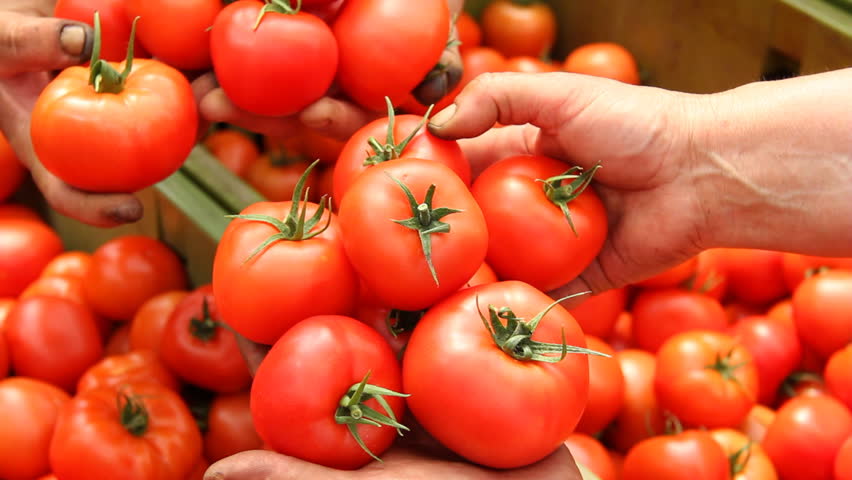
I decided to write this blog on tomato wastage and spoilage as it motivated me to start my venture- Vardhman Agrofresh Products, where we will procure directly from the farmers and process the fresh tomatoes to make tomato puree and sun-dried tomatoes. This idea came to my mind after reading about farmers throwing their tomatoes due to low prices in India. I found in my research that low and fluctuating prices are mere symptoms and the root cause were pre and post-harvest losses, poor storage methods among others. Based on the problems, I have come up with an extension strategy for Vardhman Agrofresh Products in Bhopal by which the post-harvest losses can be reduced and the prices can be stabilized. For my explanation, I have considered a situation which occurred in Madhya Pradesh, India in 2017-2018.
THE SYMPTOMS
Madhya Pradesh, India is a key producer of tomatoes in India. On average, MP produces 26.5 Lakh tonnes of tomatoes. But, the high yields need to be supported by the good infrastructure, policies and market place for sustained sales. India in general faces scarcity in these departments. Like, one of the cases, MP had a bumper tomato yield in April 2018 leading to a glut in the market which caused tomato prices to plummet to Rs 1-2 in the wholesale market, hitting the farmers hard for the third time in as many years. Due to plummeting prices, the tomato growers had to face losses as they couldn’t recover the cultivation and transportation costs. So, some farmers threw their produce on the roads (some did it for the protest, others did it as they didn’t have storage) while others who tried storing the tomatoes for longer periods had to face severe post-harvest losses forcing them to throw away their produce out of their fields. What’s more worrying is that the retail prices during the same period were around Rs10 which means the middle agent- the wholesale traders had monopoly over the growers due to imbalance in supply and demand. Surprisingly, just a few months earlier, the wholesale prices of the tomatoes during September- October 2017 had jumped to 50-70 Rs per kg due to a shortage of tomatoes in the market.
THE CAUSES
These extremely low prices during the April month were caused due to the excess cultivation in tomato producing belts leading to surplus supply. The market was flooded with tomatoes as farmers didn’t have access to good storage infrastructure, there was lack of education and information about the number of tomatoes being grown, lack of knowledge and technology about the processing of tomatoes. Another major cause which is behavioural is- the herd mentality. After the sudden increase in prices in 2017, many farmers started cultivating tomatoes for the next season in order to sell their tomatoes at such high prices. This led to bumper yield in 2018, hence crashing the market which eventually led to post-harvest losses. Similar situations have occurred with onions, garlic and other crops as well over the years where farmers have had to throw their harvested produce due to the aforementioned reasons. This is a reoccurring pattern and needs to be addressed.
THE PROBLEMS
There are many social, economic and behavioural factors that lead to post-harvest losses and hence heavy fluctuations in the tomato prices.
Due to big family trees, the land gets divided among the farmer’s family members over time leading to the division of land into small pieces for cultivation. Therefore the advanced farming methods become unviable to these farmers leading to below-par yield and lower-income. Therefore they cannot afford good storage infrastructure, hence causing PHL. It is a known fact that pre-harvest and cultivation practices decide the post-harvest shelf life of the produce. Lack of knowledge and access to proper technology lead to inefficient pre-harvest, and harvesting practices. This affects the shelf life of the products and their storage capabilities.
Due to inadequate economic policies in place, the perishable fruits and vegetables face heavy price fluctuations throughout the year leading to a slump in the prices during harvest season. For eg. Due to the absence of a minimum selling price in mandis, the wholesale buyer community uses their purchasing power to keep the prices as low as possible as happened in the case of tomatoes and onions. This middle agent in the supply chain creates obstacles for farmers in getting a fair price for their harvest. The farmer remains stressed economically and has to take loans in order to keep farming and feed their families. This vicious cycle repeats itself, and the farmers are unable to improve his livelihood, the farming methods and storage infrastructure. Hence, they are forced to sell at lower prices during harvest season or incur post-harvest losses if they decide to store the harvest.
As mentioned earlier, herd mentality is also a problem which needs to be addressed. This can only be done by educating the farmers about the markets, value addition of extra and sub-par produce, better harvesting practices etc. But there are several issues in educating them as well. The farmers do not relate to people who haven’t practised farming themselves and therefore are not willing to learn new practices from them. An economic problem occurs when we focus on subsistence marketplaces and farmers. Their focus is on short term goals. It may even mean the next meal for some of them or similar. To them, the idea of storing the product for longer periods would make sense, theoretically, but might not be a viable option. Behavioural and economic factors are the toughest to address as it is hard to change the mentality of people and teach them good practices.
THE SOLUTION- EXTENSION STRATEGY TO REDUCE POSTHARVEST LOSSES
The cultivation process in our country is highly matured one with yields increasing with each passing year. Where we lack is in the postharvest management of the harvested crops which lead to the imbalance in the supply chain. Efficient extension strategy is required to support the supply chain in order to reduce the losses and stabilize the prices.
In order to implement the extension strategy for preventing PHL, local governments should identify the clusters for the production of different types of fruits and vegetables and provide incentives to the farmers for growing those crops and focus on planned cultivation there. The cultivation data should be collected from the local bodies, local FPOs etc so that harvest projections can be created. For this, collaboration with farmer’s producer organizations (FPOs) is necessary as thousands of farmers are connected with them. They would be the best channel to spread awareness about planned cultivation in every region and will be the one point of contact for information. The FPOs will also help the subsistence farmers to follow better pre and post-harvest practices which will increase their income. We are tying up with FPOs to supply us witht the raw material which can be stored in our state of the art cold storage facility and will be used to process into tomato puree as the demand arises.
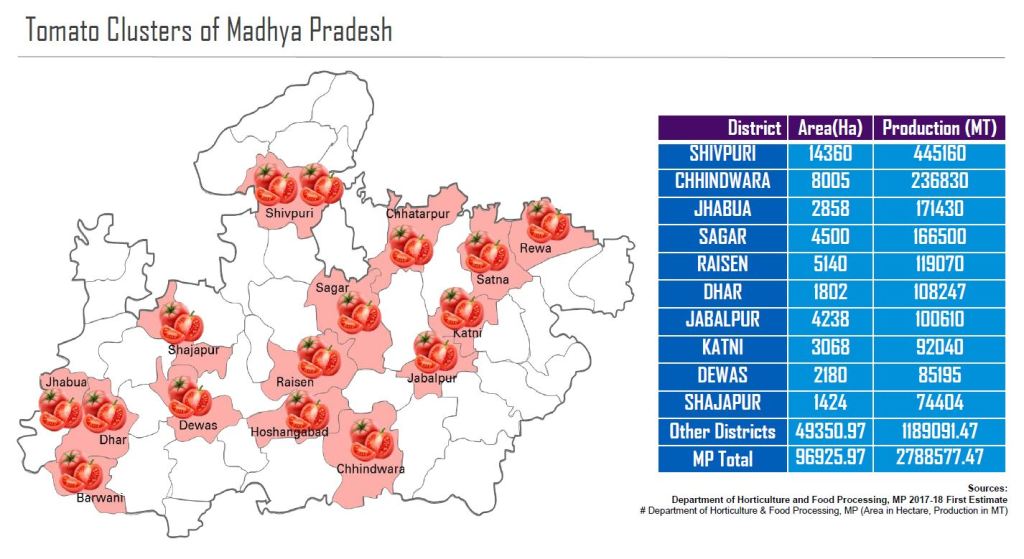
Government support is necessary for making large scale changes therefore policies should be made to promote processing clusters, either private or government-owned in these clusters and should be given operational incentives along with storage infrastructures like silos for grain storage and controlled atmosphere cold for storing fruits and vegetables. A lot of work is being done by the government in this regard with multiple food parks, processing clusters coming in association with MoFPI. Another step that can be taken is developing a portal for FPOs to directly connect with the food processing companies to whom they can sell their various products. This will reduce dependency on the middle-man- wholesale trader.
There are many models like this which have been successful in the private sector. Like SULA wines have carried similar actions near their vineyard where they have got into contract farming with the local farmers for growing grapes exclusively for SULA in the Nashik region. This way even the subsistence farmers are able to make a livelihood by selling their produce at fixed rates to SULA. This model can be a success if the farmer feels safe, therefore the payment method needs to be direct and made upfront/ upon procurement.
Another way through which the prices can be stabilized is through crop diversification. The FPOs should plan for multiple crop cultivation in their region in order to diversify their range of products with one being primary for eg. farmers can grow root crops along with tomatoes. By doing this, the supply chain of tomatoes won’t be burdened with surplus produce during harvest season if the farmers are made aware of the different lucrative crops which can be grown as alternatives to tomatoes. It will be difficult to convince a farmer to cultivate other crops but through the medium of videos, testimonials of other successful farmers (who are growing the alternative crops) they can be taught, and making them interact with other successful farmers will give them confidence.
The government should also look into developing a minimum selling price (MSP) structure for perishable crops as this will help reduce the economic stress on farmers and reduce the purchaser power ( wholesale traders) who hold a monopoly over these farmers.
Therefore, by developing multiple branches at the end of the supply chain and putting measures at the beginning of the supply chain, the PHL can be controlled as the whole cultivation process will be in control.
— Surbhit Godha
Managing partner, Vardhman Agrofresh Products
 vardhmanagrofresh.food.blog